Happy Bastille Day! Cherry Clafoutis recipe Thursday, Jul 14 2011 

It is cherry season, and I love to make a clafoutis for dessert. This one is very low calorie, about 4-5 WW Pts. Plus, I think.  I posted it in 2003, but have changed it a bit, doubling the custard.

Clafoutis

1 pound cherries, with or without pits

2 tablespoons kirschwasser, brandy, or lemon juice

1 tablespoon powdered sugar

6 tablespoons flour* or flour alternative

6 tablespoons granulated sugar

1 ½ cups skim milk

4 eggs

grated rind of one half of a lemon

2 pinches of nutmeg

1/4 teaspoon vanilla

1. Remove stems from cherries.  You may also remove the pits, if desired (Traditional French cooks usually leave the pits in. They say it adds flavor). Toss the cherries with powdered sugar and kirschwasser and set aside for at least 2 hours.

2. Preheat oven to 375 degrees and spray a Pyrex dish (I have an 8 inch square white porcelain dish with high sides that I love to use – whatever size lets the custard come up over most of the cherries) with cooking spray.

3. In a bowl, pour the flour and granulated sugar, and stir together.

4. Pour in milk and whisk until thoroughly blended.

5. Whisk in eggs, one at a time, and then add lemon rind, nutmeg, and vanilla.

6. Pour liquid off of cherries (If it is a liqueur, and if you like, you may make this liquid part of the 1 ½ cups of milk – just add less milk).

7. Scatter cherries evenly on bottom of cooking dish.

8. Pour egg and milk mixture over cherries and cook for 30-45 minutes, or until brown and puffed.

9. Chill in the refrigerator. The clafoutis will deflate after it is removed from the oven. Serve cold.

Servings: 8

Notes: I have a bottle of Pineau des Charentes, a fortified wine from Poitiers, France, and I usually soak my cherries in that.

*I also have made the recipe gluten-free by substituting the flour for masa de harina, a corn product.  Almond flour might also be good.

Australian Loteria, Part Two Friday, Jun 3 2011 

So, my students prepared for their loteria creation by watching watching videos

We discussed putting the cassowary in place of the rooster.

on Safari Montage and on Discovery Education.  I also had them go through the Carole Marsh CRCT Prep book, which is to the point and a great resource.  The videos had a lot of great things to identify, such as strange animals and landmarks.

But, since it was close to the end of school, I thought I needed to step it up a bit.  That’s where Amazon Video on Demand comes in.  The first thing I found was a series called “Bite Me”  with Dr. Mike.  This crazy man goes around finding venomous plants and animals and trying out the venom and irritants on himself.  Then, he tells you what it feels like…  Here’s the blurb:

Virologist and intrepid explorer Dr. Mike Leahy is on a high-stakes mission to meet the maddest and deadliest creatures on the planet. In this 8-episode installment, join Dr. Mike as he puts his body on the line against an army of exotic pests whose bites, sprays, and stings promise much more than rash. From fire ants and vampire bats in Brazil, to venomous lizards in the jungles of Borneo, to acid-spraying scorpions in India, Dr. Mike will subject himself to the full brunt of nature’s wrath in the name of scientific understanding — even if it means swallowing a tapeworm cyst in Hanoi! Down the hatch!

I showed episode 6 of Season 1 – Coastal Australia.  One of my students said that it was the best video they had ever seen at school.  Oh, make sure you get all school videos approved, of course.  ;-)   Episode 4 shows the Australian Outback, but the images are much grosser and have more to do with viruses and fungi you can get from sheep and other animals… I chose not to show that.

The Spider

Another good series is Bizarre Foods with Andrew Zimmern.  Here’s the blurb from Season 4, Episode 5 (Sydney):

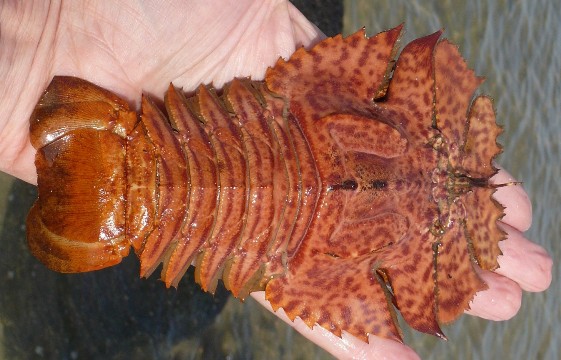
Andrew goes snorkeling, spear fishing and visits a farm where they “pamper” their cattle. He ventures to the Sydney Fish Market where he finds things even he has never tasted before, such as Morton Bay and Balamain Bugs, Flathead Fish and Spanner Crabs.

There is also another episode about the Outback (Season 4, Episode 3):

Andrew heads into the Australian Outback where he eats wallaby with some Aborigines, samples crocodile cooked on the barbie and helps thin out the huge populartion of poisonous cane toads by making them into a meal.

I told my students to do their best on spelling the names of the things they thought should go in the Loteria deck.  I also put some of the words on the board.  Then we talked about the traditional food and plant and animal cards in the original Don Clemente deck and what items we would substitute from Down Under.

That is one wierd camaron (shrimp) - lobster... but it works.

There is a need to show a spectrum of foods, famous people, cultural icons, everyday items, musical instruments, and other things – slang words are good – so that the entire loteria is not animals.  That’s an easy thing to do in Australia, where there are so many bizarre fauna.  You may have to have them vote on what animals should go in the deck.

Australian Loteria, Part One Wednesday, May 25 2011 

Click on the picture to go to the NEH Oaxaca website, also known as the Wired Humanities Project. Scroll down to High School/Middle School Art / Celeste LeTard Williams / “Lotería” to download the PowerPoint tutorial.

Last summer, when I attended the NEH Oaxaca Institute for School Teachers, I created a PowerPoint tutorial on how to make an original Loteria game about any topic.  I am happy to say that it was posted on the Wired Humanities Project page along with some worksheets and resources for the classroom.  Just click on the image to the left and it will take you to the lesson plans prepared by myself and my colleagues from last summer’s Mesoamerican Institute.  You will need to scroll down to the section which says High School/Middle School Art, then look for my name and the title “Loteria”.  There are also some worksheets to be used for students to draw a loteria card, as well as a rubric and a sheet with the original cards and calling rhymes listed on it.

This year, I planned on having my students create a Loteria game about Australia.   The idea was to introduce the original Mexican Loteria and to have the students search out analogous icons and symbols from Australia to replace the Latino images.  I have done blog entries about this idea in the past. This one actually lists the different cards of the Loteria in order.   I also collect Loteria decks and images, which I use for classroom examples.

An important resource is also the gallery of Loteria Card Deck uploads at Elsewhere.org.  There are about 20 decks scanned and uploaded to the website.  They are great for examples.  You could have students research the images there, but just beware of the “Queer” Loteria because of inappropriate images.  Some of the other decks are great for pulling images.  Or, you can just purchase a Loteria game at a Mexican grocery or at an online source.

The thing I appreciate about Elsewhere.org is that there IS a variety of images.  So you can pick and choose your images for classroom appropriateness.  There are things on the traditional deck that could be considered inappropriate.  For example, La Sirena/The Mermaid is usually bare-breasted.  You can find images with covered breasts, such as the Anahuac Sirena and the Compadres Sirena.  There is a non-smoking El Catrin (also known as the Dandy, or the Gentleman), El Valiente (The Brave One)  without a weapon,  La Botella that is not Tequila – yes, I know, the one in the original deck is catsup, but I don’t like the image.

There are also some images that could be offensive, such as El Negrito (The Black Man) and El Borracho (The Drunkard).  And, El Soldado (The Soldier) is pretty much always going to have a gun.  But, you could replace those images with something else from one of the other decks, such as El Payaso (The Clown), or El Mono (The Monkey) or El Moro (The Moor, or Arab), or El Atleta (The Athlete) or Los Boxeadores (The Boxers).  Also, I like it that El Apache could also be El Azteca.  And… El Gorrito (the Bonnet – who wears a bonnet anymore?) could be replaced by El Sombrero (The Hat).  The possibilities are endless!

I really appreciate the work that was done with the Loteria Card Gallery.  Take some time to look throught the images.  Especially noteworthy are:

  • The Clemente Jacques Series 2 and Alternate Series 2 – These were introduced  in the 50′s or 60′s.  The images in the Series 2 Alternate look older than the Series 2, which are more refined.  These decks are very hard to find – I paid almost $100 for a Series 2 on E-Bay.
  • The Loteria de Teresa Villegas – also published by Clemente Jacques and available online – try E-Bay.  Teresa Villegas also has a website with more details about her Loteria project.
  • My Loteria, by Cristina Sosa Noriega, was available at HEB grocery stores, along with coordinating products.  Some of the products are still seen on e-Bay and she has a website.
  • The Loteria Zarela was commissioned by WalMart several years ago and was put on a product line for home and bath.  Zarela Martinez is a celebrated chef who has a restaurant in NYC and has authored many cookbooks.  She also had a designed loteria of fruits and vegetables.  These items are very hard to find now.
  • Maison-Celeste.com – my CafePress Store is where I display and sell my own Loteria designs.

Farmers Market Friday Sunday, Mar 6 2011 

Friday, on the way home from work, I stopped by the Buford Highway Farmers Market.  It’s my favorite thing to do, and I was making good time, so I decided to make a detour.  The only thing is that I usually spend at least an hour and a half there – I could easily spend more time, but I try to limit it.

When you enter, the first thing you see is the produce.  I wandered around, looking at all of the fruit – fresh guava, horn melon, mangoes… I settled on a pound of strawberries for $1.49. I also bought some red seedless grapes and HUGE Red Delicious apples for my husband.  The only “unusual” fruit I got was a variety of apple called Prince.

Then, I spied the rhubarb. I have never had rhubarb before.  I guess it’s not a big thing in my family, or in Louisiana, or Texas.  It was $3.99 a pound, but I was feeling adventurous, so I grabbed a fistful that came to just over a pound and a half. I used them to make a rhubarb crisp – gluten free. I just followed the recipe and replaced the flour with Bob’s Red Mill Gluten Free Flour Mix.

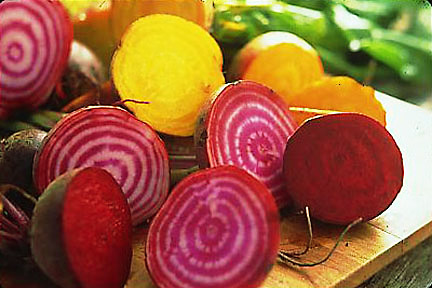
Last Christmas, I roasted my own beets, and made an Ensalada de Nochebuena from a recipe by the Homesick Texan.  I found not one, but three different varieties of beet, with greens intact, and bought them.  The were regular beets ($1.79), golden beets ($2.49) and Candy Striped beets ($2.39).  I have to admit it was the Candy Striped beets that sold me. Who can resist cooking with three colors of beets? Not I.  So far, I have roasted the beets and cleaned the greens. I will probably saute the greens in garlic and shallots and olive oil. Two side dishes in one veggie.

In produce, I also picked up herbs: sage, tarragon, oregano, mint, Italian parsley, and cilantro.  I plan on chopping them up and freezing them. I want to buy mini ice cube trays to freeze them in.  I have still not forgiven Trader Joe’s for not offering ALL of the Dorot frozen herb trays at their store.  I have heard claims of people finding them in regular supermarkets, but I have not had that luck yet.

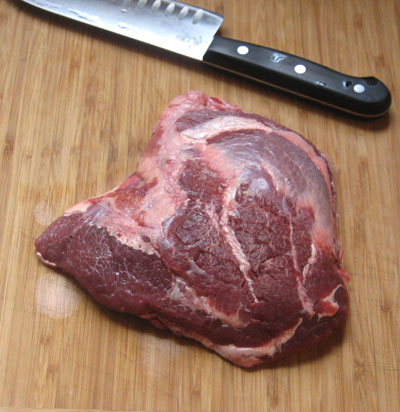
Then, I went to the meat department. Now, there are a plethora of meats to choose from.  I almost got some marinated quail, but they were advertised a “spicy”, so I passed. Instead, I perused the beef “offal” aisle, and espied something called “beef cheeks” (in Spanish, cachete).  There was a meat clerk nearby, so I asked him “Como se cocina? (How does one cook this?).  He explained that it is usually boiled (or simmered) in a pot of water for a long time – 2 to 3 hours. So then I asked him, “Usted sabe que es un ‘slow cooker’?” ;-)

My original plan was to cook it in the slow cooker, but I found a recipe for Barbacoa Beef Cheek Tacos.  So they have been marinating overnight, and I’m about to brown them in my oddly shaped Dutch oven and braise them in the over for 3 hours. Thank goodness I bought fresh tortillas while I was there.  Next time, I may make Beef Bourguignon – I got 1.67 pounds for $3.74, so I want to work with it some more if this barbacoa works out.

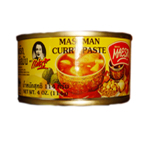
I wandered the Asian, Philippine, and Indonesian aisles for a while, but only picked up a small can of Massaman Curry Paste (89 cents) and a packet of Instant Miso Soup Individual packets in Clam flavor (8 servings for $1.49). I just had a big bowl of Miso Soup using two of the little pouches – I added shrimp, rice noodles, a sliced boiled egg, and garnished it with cilantro.  Not bad!

Finally I picked up some snack food and candy oddities to share with my students. I bought some Indonesian tamarind candy – I have one student from Indonesia, and the most of the rest of my classes are from Mexico and Latin America.  They also enjoy tamarind, so I thought this would show something their cultures have in common. Then, I bought a bag of , which will surely be vile to everyone EXCEPT my Indonesian student. I also have two African and one Nepalese student, and that will just probably be a new experience for them.

Okay, my beef cheek barbacoa is slow cooking, and I need to go and get some avocado and red onions to go with it.  Can’t wait to see how it comes out!  The rhubarb crisp was sure great, as were the beets.

On Grant Writing Sunday, Jan 16 2011 

National Endowment for the Humanities Summer Seminars and Institutes for Teachers

Last year, I applied for and was accepted to participate in an NEH Summer Institute for Teachers.  This grant was to visit Oaxaca for four weeks to participate in an Institute on Mesoamerican Culture and the National Endowment for the Humanities paid $3300 towards the trip. That money covered the apartment rental, air fare, meals and various other expenses.  I had some money left over to buy some art and books – and I may have had some left over to pay for expenses for some of my family to visit…

I have spent some time trying to get the word out about the NEH seminars and institutes that are available this year.  I have encouraged my colleagues to apply.  There are two seminars that are going to be in France – one in Avignon and another in Paris, Lyon, and Normandy.  There appear to be many offerings for Spanish Speakers, with destinations such as Spain, Mexico, and New York City. Many of the seminars and institutes are in the United States, but there are others (besides the ones I mentioned) that will take you to Italy, the United Kingdom, the Netherlands, and Austria.

These seminars are open to teachers from K thru 12th grade.  All subjects are welcome – don’t assume that a trip to Mexico, for instance, is just for Spanish teachers.  In our Institute, which took place in Oaxaca, there were art teachers, Spanish teachers, social studies teachers, and even a media specialist and a science teacher.  Read the Dear Colleague letter and think to yourself about what you can bring to the table.  There is a new part of the program where graduate students may also apply (up to 3 positions can be filled with graduate student applicants).

In order to apply for a grant, you need to register online with the NEH.  An applicant can apply for up to two different seminars or programs, but can only attend one of the choices (if the applicant is offered a spot on both!).  Then, the application process is spelled out on the web pages of each of the participating universities.  Basically, it involves writing a 4 page essay on why you want/need/have to participate in that particular seminar.  I encourage you to have some concrete ideas or lesson plans or units that you envision completing during the seminar.  You will need to procure 2 to 3 sealed letters of reference from colleagues or administrators, and write up a curriculum vitae as well.

If you are planning on taking family or your spouse with you, I suggest that you contact the director of that program.  When I went to Oaxaca, my husband was able to accompany me there.  He could not participate in any of the classes or field trips, but he did go to the opening and closing receptions.  He also did all of the shopping and errands – it was good for his Spanish, I think.

The application deadline for an NEH Summer Seminar is March 1, 2011.  The application envelope has to be postmarked before March 1st.  I recommend that you use a delivery confirmation or something that will let you know it got to its destination.  I had a really great Director who was patient when I kept e-mailing to ask if my application had arrived (even though I had used delivery confirmation, there was a snafu in even THAT process!)  The participants are notified, I think, in April, and have a limited amount of time to accept or refuse the grant so that alternates can take their places.

Fund for Teachers Travel Grants

Four years ago, I was awarded $5000 from the Fund for Teachers to study Spanish in Morelia, Michoacan (Mexico) and to collect art and arts integration ideas from the region.  The grant was for five weeks and included air fare, apartment rental, one-on-one language classes and trips to Patzcuaro, Guadalajara, Guanajuato, and Puebla.  I also had money left over from my budget to buy art pieces to exhibit at my school.

Unfortunately for most teachers who live in Georgia, there are not many school systems that are eligible for Fund for Teachers Grants.  The organization is out of Houston, Texas and the year that I applied was the one and only year that Marietta City Schools employees were eligible to apply.  I believe that there must be some sort of auxiliary present in the system – a group of wealthy people, I mean – to raise part of the funds for their teachers.  That’s just a guess.  I think I’m right:  here is a page for Partners who provide funding.  But some Partners cover a lot of states.  You need to go to the Apply page and see if your school system is eligible.

When it comes to the application process, the Fund for Teachers Program is really the most user-friendly of the two.  The entire application is done online.  That means, of course, that you need to read over the instructions carefully and come up with your itinerary, project, and projected budget before you go online “live”.  There are all sorts of helpful resources – examples of successful essays, budget tips – really everything you need to get the process done right.  The added bonus is that you don’t have to worry about postmarking and mailing the application – and then worrying about when it gets there. I think that I remember that correctly, but it may have been necessary to apply online AND send in a written application.  Check the website.

Now, when you are awarded your trip, you are expected to keep up with all of your receipts and expenses, and make a detailed financial report when you return.  You are given a couple of months to gather your report materials, and to write an essay or make a scrapbook or do SOMETHING to record your experience.

One more note on the Fund for Teachers application process.  A couple of years ago, I was invited to participate in choosing the candidates for the Atlanta Program.  I believe that I received 3 to 4 applications ahead of time to read and evaluate. It was a lot of fun – we gathered at a nice restaurant and sat at round tables (about 7 to 8 to a table, I think).  After a presentation of the program and past participants, the people at my table got up and presented the application (or applications) that we thought merited a grant.  When we were done, we had ranked the applications in order of importance.  Then, the emcee went around to each table and chose grant recipients until there was no more grant money left!

It was amazing how passionate and defensive some of us got about our “pet” applicants.  We were truly disappointed when our pets did not make it.  On the other hand, it seemed easy to see those applicants who mixed up the name of the organization.  It’s not FUN for Teachers – although it can be.  I’m just saying that your application really does have to have some evidence that you will be sharing your experience with your students and colleagues.  Keep that in mind before you ask for that trip to Vegas to study “math”.

The application deadline for a Fund for Teachers Grant is January 28, 2011 @ 5:00 PM.  After that, the computer application center closes.  I know that’s short notice for this year, but, if your school system is eligible, consider it for next year.

Smoky Margarita Syrup Saturday, Jan 15 2011 

I ran out of my last batch of smoky tea syrup and did not take notes when I made it.  So, today, I’m making some more.  I made regular margaritas yesterday and found them less tasty (okay, sweet.) than my new regular.

So, I have all of the ingredients handy, and I did write my measurements down:

First, start with the chile water:

Put the three chile peppers in a pan with 3 cups water. Bring to a boil. Turn the heat off and let the chile peppers “steep” for a whle – you may smush the chile peppers with a wooden spoon if you like.

Strain the chiles into a receptacle to catch the chile water.  You may save the chiles for another use. Check the measurements and add more water if necessary to bring the amount to 3 cups again.

Next, use the chile water to steep your tea:

Return the chile water to the pot and bring to a light boil again.  Place tea bags in pot and steep for a while.

Add:

  • 1/2 tsp. ancho chile powder
  • 1/4 tsp. Penzey’s smoked Spanish paprika
  • 1/4 tsp. Penzey’s ground red chipotle
  • a dash of cinnamon (okay, that may not be necessary)

Strain the mixture one more time and add the following while the water is still hot:

  • 2 cups sugar (1 cup white and 1 cup brown) – I ran out of white sugar.

I strained it one last time, adding a paper towel to my strainer to sift out most of the grains of spice.

Transfer to a glass or plastic bottle or container and keep in the refrigerator. Keeps in the refrigerator for over a month.

It looks sort of like this...Here is the first try-out:

Pour the ingredients (except the lime wedge) over ice into a cocktail shaker.  Shake well, then pour into a glass with crushed or chipped ice cubes.  Garnish with lime wedge.

Now, ordinarily, this is also supposed to include Mezcal, but I didn’t buy any this time.  I have to say that this is pretty good – I could taste the chipotle only in the concentrated syrup.  I didn’t think that the drink itself was spicy in a bad way.

Pay de Pastor (Mexican Shepherd’s Pie) Wednesday, Jan 12 2011 

I am stuck at home on the fourth snow day of 2011 in Georgia.  A record, at least, in my lifetime…  Lucky for me, I have a well-stocked kitchen.  So, I have been cooking quite a bit.  Here is a recipe I whipped up last night.  Now, I know that some sticklers are going to get me for calling this a Shepherd’s Pie (Pay is Spanglish and pronounced “pie” BTW) because it uses turkey (and a little bit of beef because I thought it needed more meat), but that’s okay.

One caveat:  This is my best attempt to write down what I did to make the casserole last night.  I did not measure all of the spice ingredients, so you can monkey with that at will.  Also, you may make any meat, veggie, or cheese substitute you want!  I used the Old El Paso enchilada sauce because it is gluten-free (many enchilada sauces are NOT).

Pay de Pastor: Mexican Shepherd’s Pie with Sour Cream and Green Chile Mashed Potato Topping

Vegetable Filling:

1 onion
2 shallots
4 celery stalks
1 orange or yellow bell pepper
1/3 to 1/2 cup baby carrots
1/2 cup Trader Joe’s Fire-Roasted Corn
2 cubes Dorot Chopped Garlic Cubes
3 – 4 cubes Dorot Chopped Cilantro
1 tsp cumin seeds
2 Tbsp olive oil

Chop onion, shallots, celery, bell pepper, and carrots to small dice. Heat olive oil in a large skillet on the stove. Put all of the vegetables in the pan and add the garlic, cilantro, and cumin.  Saute until vegetables are soft, then add roasted corn. Blend corn with vegetables until defrosted.  Put the vegetables aside in a bowl and wipe out pan.

Meat Filling:

1 pkg. ground turkey (19.2 oz.)
1 angus burger patty (5.3 oz.)
1/2 Tbsp. olive oil

Put the ground turkey and beef patty together in a bowl and mix the meat together. Heat the oil in the large skillet and saute the meat until lightly brown.  Pour the contents of the skillet through a strainer and return to the pan.

Gravy:

1 pasilla chile
1 guajillo chile
1 can fire-roasted tomatoes
1 can Old El Paso mild enchilada sauce
1/4 – 1/3 cup chicken broth
1 tsp. Don Julio Cumin/Pepper blend
1 tsp. Penzey’s Ground Red Chipotle Chile Pepper
1 tsp. Penzey’s Smoked Spanish paprika
2 – 3 cubes Dorot Chopped Cilantro
2 cubes Dorot Chopped Garlic

Soak the chile peppers in a bowl until soft.  Discard the stem, seeds, and veins of the chiles and slice into smaller pieces.  Place the chiles in a blender with the tomatoes, cilantro, garlic, and some chicken broth and puree ingredients. Pour contents of blender over the meat in the skillet (use some more chicken broth to get the rest of the sauce out if necessary).

Mix the sauce and the meat and add spices as needed.  I added Don Julio cumin/pepper powder, chipotle powder, and smoked paprika.  I also added the enchilada sauce as an afterthought, but it could be added to the blender gravy if desired.

Add the vegetables to the meat mixture in the skillet or in a large bowl and mix them together.  Spread mixture in an 11 by 17 lasagna pan or clear baking dish.  Set aside while you are making the mashed potato topping.

Mashed Potato Topping:

3 large baking potatoes, peeled
1/3 cup light Sour Cream
1 small can chopped green chiles
1 7 oz. package Kraft 2% fat shredded Mexican Cheese blend

Chop the potatoes into approximately equal chunks – about 1 to 1 1/2 inches.  Put cut potatoes into a pot and cover with water.  Allow the water to come to a boil, then cook potatoes until they are able to be broken apart by a fork.

Strain the water out and return the potatoes to the pot.  Using a potato masher, mash the potatoes part-way.  Then, add sour cream and can of green chiles and mash until smooth.  Add half the package of shredded cheese to the potatoes and blend the mixture.

Spread the mashed potato mixture on top of the meat and vegetable mixture.  Place in a pre-heated oven (about 375 degrees), and bake for about 30 minutes.  Take the pan out and sprinkle the remainder of the cheese on top of the casserole.  Return to oven and cook for 10 minutes, or until cheese is bubbly an casserole is heated through.

Remove from oven and allow the casserole to settle before slicing.  Serve with additional sour cream and salsa.

In Pursuit of the Smokey Margarita… Monday, Nov 15 2010 

I spent the month of July and part of August in Oaxaca – it was an amazing opportunity.  I was awarded a fellowship to the NEH Summer Institute for Teachers there, where we studied Mesoamerican Cultures in History.  While we were there, we were educated on the production of mezcal, and even visited a mezcal distillery run by Beneva called Rancho Zapata.  The waiters there were kind enough to pass out free samples.  As were all of the pretty girls who ran the tasting rooms on the streets of Oaxaca.

The main difference between tequila and mezcal is the type of agave used, and the process for distillation.  The main characteristic, I think, for mezcal is that the agave is roasted before it’s fermented.  Here is a cute little video that leans a bit in the favor of mezcal…

Anyhoo… When I returned to Atlanta, I was happy to see that at my favorite restaurant - El Agavero Cantina – there was a drink offered called the Smokey Margarita.  It was actually a happy accident that I got to taste it.  My friend who arrived early had ordered it and did not like it.  She mentioned that it had mezcal in it.  So, I traded my margarita for hers.  Every since then, I have ordered it when I dine there.

Of course, I started wondering just what made it smokey.  Sure, mezcal has a smokey taste, but not that smokey.  So… to the internet!!!

In my search for the terms “smokey” and “margarita” – this is what I got:

A recipe by Bobby Flay for the Food Network:

  • 2 ounces tequila (recommended: El Tesoro)
  • 1-ounce Triple Sec
  • 1-ounce fresh lime juice
  • 3/4 teaspoon simple syrup
  • Ice cubes
  • 1/2-ounce mezcal (recommended: Del Maguey “Chichicapa” Single Village Mezcal)

Place tequila, Triple Sec, lime juice, and simple syrup in a cocktail shaker and shake until combined. Serve over ice in a rocks glass and pour mezcal on top; do not stir the mezcal into the drink, as it should “float” on top.

It was kicked up a notch by this reviewer: ” The mescal really adds some nice flavor. Took it one step further and picked up some smoked salt at whole foods to rim the glass and all I can say is that is one fantastic margarita smokey goodness.”

Here is another from the blog Daddy-O’s Martinis:

Build over ice in a double old fashioned glass.
1 oz metl silver mezcal
1/2 oz metl silver tequila
1/2 oz grand marnier
1/1/2 oz fresh lime juice
1/2 oz agave nectar

Place the bottom of a cocktail shaker upside down to cover the old fashion glass and shake vigorously. Reserve drink in tin and salt rim of glass, pour back into the same glass and garnish with a lime wedge.

This one from Mission: Margarita – it is similar to Bobby Flay’s recipe.

Here is one that uses smoked paprika to add flavor:

Ingredients For 2 Cocktails

  • 3 tablespoons sea salt
  • 1 tablespoon plus 1/4 teaspoon
    smoked paprika,* divided
  • 1/2 cup fresh lime juice
  • 6 tablespoons agave nectar
  • 2 ounces tequila

Preparation

  1. Mix sea salt and 1 tablespoon of the smoked paprika on a small plate. Wet outside rims of margarita or other beverage glasses with lime wedge. Dip glasses into sea salt mixture to coat.
  2. Fill cocktail shaker with 2 cups of ice. Add lime juice, agave nectar, tequila and remaining 1/4 teaspoon smoked paprika; shake until well mixed and chilled. Immediately pour into prepared glasses.

*The regular paprika you have in the spice cabinet is probably sweet paprika. Spanish smoked paprika is a special kind, smoked over oak fires so it takes on a smoky flavor. In Hungary, there are six classes, or types, of paprika ranging from delicate to hot. In order to achieve the flavors of this recipe, you’ll need to use Spanish smoked paprika.

But this recipe – Carlyle’s Smoky Margarita (notice the smoky instead of smokey?) – gave me some real ideas:

1.75 oz Herradura reposado tequila
.5 oz Cointreau
.5 oz lime juice
.5 oz lapsang souchong syrup

Shake over ice and serve on the rocks in a salt-rimmed glass.

Here’s his note about the lapsang souchong syrup:

Lapsang souchong is a delicious Chinese black tea dried over burning pine wood. This distinctive process gives it a strong smoky aroma that lends itself well to use in cocktails. To make the syrup, simply brew hot lapsang souchong and mix with an equal volume of sugar.

So, I’ve been working with smokey things:  dried ancho chiles soaked in hot water, powdered chipotle chiles and ancho chiles, paprika (not the smoked kind, though), and I even a couple of packets of All Night Samba Yerba Mate tea I had in the pantry.  And, yes, I mixed them all together.  It wasn’t bad.

Now, so far, the only variety of Mezcal I have been able to find is Monte Alban.  It’s not bad, but I was just curious as to whether or not there was a smokier brand.

But, lucky for me, I live near downtown Norcross, home of a great shop called Taste of Britain.  And what do the British LOVE?  Tea!!!  Strong, black tea.  So, I stopped by and bought a large box of Taylor’s of Harrogate Lapsang Souchong tea bags.  And, boy are they smokey…

At the moment, this is my recipe:

1 part tequila (Jose Cuervo Traditional)

1/2 to 3/4  part Patron Citronge (or orange liqueur)

2 parts sour mix (I am using 1 part Jose Cuervo Margarita Mix and 1 part Sinless Margarita Mix at the moment)

1/2 to 1 part strong tea mix*

agave nectar to taste

*I am still tweaking the mix.  More on that later…


A Long Absence Saturday, Oct 30 2010 

I have not written in my blog in ages – I think the last entry was at the end of July, from Oaxaca.  So, obviously, I am not in the running to be one of those people who make money or generate thousands of followers with my blog.  Oh, well.

I am sitting at the Toyota Service Center – a really nice place, actually.  There is everything one could need for survival: tables, comfortable chairs, wi-fi, coke machines, a bathroom.  I may stay until my car is ready or call my husband to pick me up and come back later.  At the moment, I am cool.

Before I came, I went by the Georgia Bakery and picked up a chicken and pesto sandwich on French c0untry whole wheat and an almond croissant.  Despite its name, it is really a French bakery, and the proprietor, Olivier hails from France.  He makes his own bread and pastries, and has a great selection of sanwiches, panini, and ready-made quiches and savory pies available.

So, now I am checked in, settled in and eating my brunch.  I had planned on waking up at 8AM and coming up here earlier, but it is REALLY difficult for me to get up before 10AM on a weekend morning.  So I had to wait for a while to get checked in.  No problem – I’ve got time.

Lately, I have been busy with school, thinking about lesson plans to follow up my National Endowment of the Humanities Mesoamerican Institute in Oaxaca, and when I haven’t been busy with those things, I have been going out to eat too much and sleeping or napping when I can.

This year, to our surprise, we have twice the number of ESOL students than we had anticipated.  Pretty impressive, considering the measures that Cobb County is taking to scare immigrants off from our neck of the woods.  Actually, a small number of our students are new immigrants.  Unfortunately many of them have been in the United States for a very long time, which begs the question: why are they still in ESOL?

If there are any ESOL teachers reading this, it may not surprise them at all that a student can be a U.S. citizen, educated from kindergarten in the U.S. school system, and still be in the program.  Increasingly, the role of the ESOL teacher is becoming one of school detective and site interventionist.  I have been looking through files, requesting student files from other schools, and speaking directly with whomever I can to get a clue.

Several students have been in our school system since kindergarten, yet their ACCESS scores are below a 5 on the scale.  This means that teachers are reluctant to exit them from the program.  It is both a legalistic move and one that is made for self-preservation.  The fact is that with all of the “Reduction in Force” in school systems last year, the ESOL program lost a lot of teachers.

I won’t go off on my soapbox (or is that “get up on my soapbox” OR “go off”?) about how I feel about keeping students in the program past their “prime”.  I has been happening since I switched over to teaching ESOL 8 years ago.  The practices back then, when we were administering a placement test called the LAB were a little more open to interpretation.  I and other teachers could make the call as to whether a student still needed to be in the program, or needed to be exited for his or her own good.

There are basically three reasons why students do not make significant progress after being in ESOL for over 3 or 4 years.

  • Reason 1:  Lack of motivation – the fact is that they are comfortable with their friends and the perceived easier curriculum (Yes, it IS possible to fail a placement test on purpose).
  • Reason 2:  Truancy or excessive moving around – since they are forced to follow the cheaper rental rate or the more lucrative job market, immigrant families ten to move around a lot.
  • Reason 3:  Undiagnosed learning disabilities – some students may NEVER pass the ESOL program exit criteria, OR the ITBS, OR the CRCT.  Keeping them in the ESOL program often means that these problems are classified as “Limited English” problems.

And so it goes.  Now, I am not at all enthusiastic about there being a dearth of students for me to teach.  This might mean that I will have to go back to teaching French – in the MYP program, all students are required to take a foreign language.  Or, I could be called upon to employ one of my other certifications:  Middle Grades Language Arts and/or my “magically” appearing certification in Middle Grades Social Studies.  This means that I would have to cope with 4 times the student load, with the accompanying organizational and discipline challenges.

But, on the other hand, is it really fair to hold children back from getting the education and help that they really need – just to hang on to my job?  I don’t think so.  I am not trained to diagnose and accommodate Special Ed. students, and those students need to be identified and sent on to other people who can help them.

Also, with the big emphasis on student performance, I understand why many regular ed teachers would prefer NOT to have more unmotivated students in their classroom.  It’s easier to blame the problem on language acquisition.  I don’t know what the solution is – this is just what I happened to be able to write about today.

Two great meals in the Oaxaca area Friday, Jul 30 2010 

Yesterday, as part of our “Arts and Crafts Week” here at the NEH Summer Institute on Mesoamerican Culture, we went to the town of Teotitlan del Valle.  There, Lynn Stevens, a distinguished professor of Anthropology and Ethnic Studies who lived and studied the weavers in Teotitlan.  She even learned how to speak Zapotec while she lived there!  Just for our visit, the family she lived with gathered and made a big lunch for us at their compound.

One of the things we did while we were there was to go out into the milpa, the cornfield.  There, corn (maize), beans and squash are grown at the same time (I had thought they were rotated by season or year).   The corn provides a stalk for the beans to climb on, and the squash is planted between the rows to keep the ground covered and the weeds out.  While we were out there, one of the men pulled up a weed and told me to taste it.  He said that this weed was going to be a part of the soup we were going to eat shortly.

Here is a milpa

We went back to the compound, where we were given a demonstration of dying wool using natural colorings.  Then, we sat down to long tables and prepared to eat.  It is a tradition to toast the meal with mezcal shots, and we also had agua de jamaica (hibiscus flower drink) to drink.  As promised, the soup was served to us first.

I found out later that the herb used in the soup was called chepil (or chipil) and it was very good.  Here is the info on it from a website on Mexican culinary herbs:

Chepil or chipil crotalaria longirostrata:  An important ingredient in Oaxacan cooking, probably because of its drought resistance, the tiny leaves are tucked into the famous tamales de chepil and their green bean-like flavor adds a delicious touch to white rice.

The sopa de chepil was served with squash blossom quesadillas made with freshly made tortillas.  The soup itself seemed to be a broth (chicken?) with chilis and corn masa.  There was cut up squash and chepil leaves in the soup as well.  I thought it was great.

chepil in the wild

Following the soup was chicken in mole negro, accompanied by white rice.  The mole sauce was great and I ate all of mine.  Dessert was a strange regional dish called nicuatole.  It’s basically, in the words of a colleague, “corn jello”.  I had a version at one of the local restaurants that had a very smoky taste, but apparently this is not usual.  The nicuatole served in Teotitlan del Valle was made from blue corn and had a thin layer of red dye on the top (the dye came from cochineal beetles – the same red dye used to color the wool for the rugs.)

The next day, we had a very interesting talk on corn by Marietta Bernstorff of the MAMAZ (Mujeres Artistas y el Maíz) Collective.  She had gotten together a group of women artists who have made art related to corn and its importance in the cycle of life.  There is a wide variety of artwork in their shows, including photography, collage, installations and multi-media works.  They are very concerned in protecting the traditional varieties of corn indigenous to Mexico.

Nicuatole, or "corn jello"

Then, we went to Itanoní, a restaurant in Oaxaca City that specializes in native corn from the Oaxaca area.  We had a tasting menu that consisted of: quesadillas made with blue or white corn, memelas with beans and queso fresco, and chalupas.  Next time I go, I will need to try their agua fresca made with lime juice and mint (or the one with lime juice and parsley…).

Next Page »

Follow

Get every new post delivered to your Inbox.